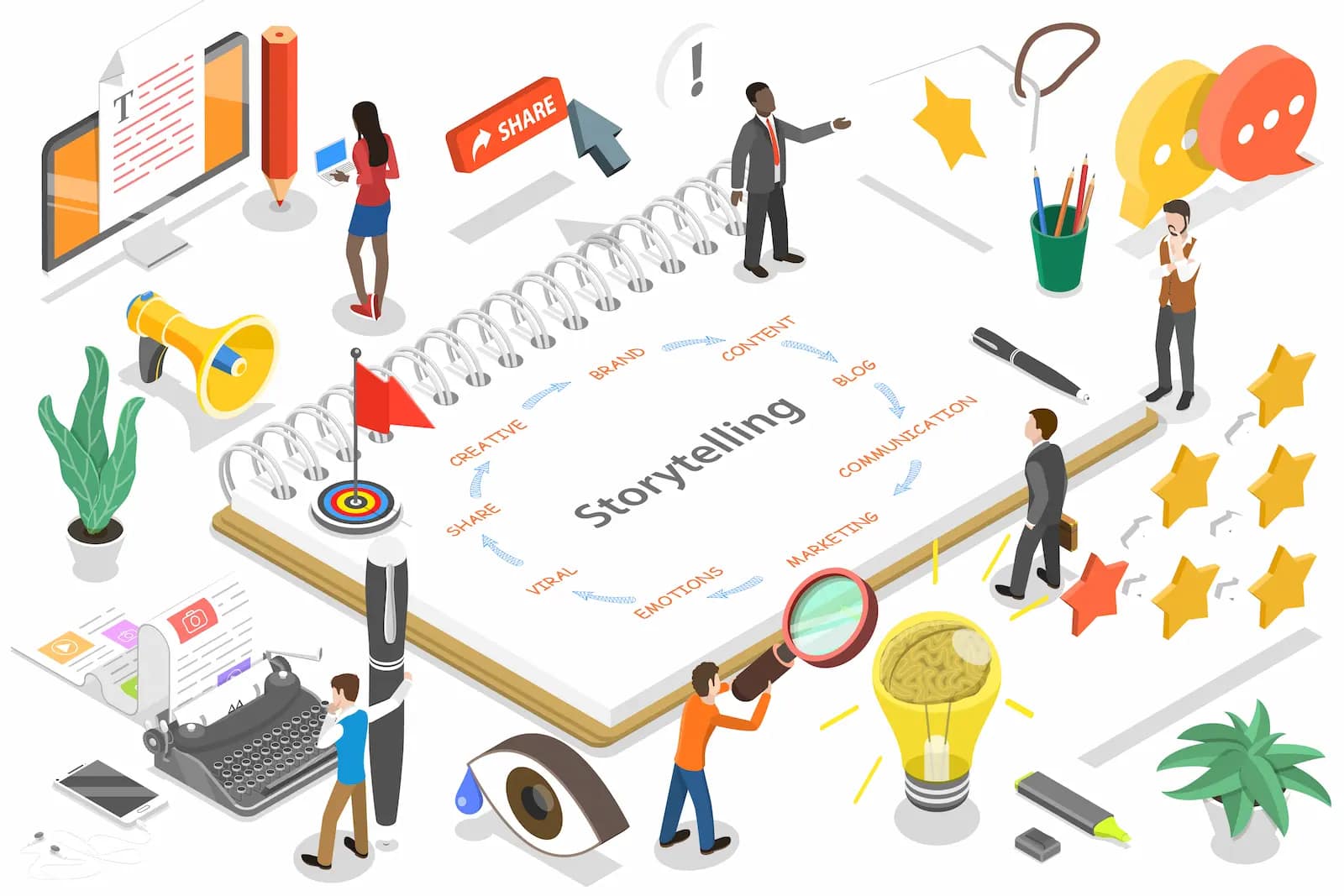
Why the impact of visual storytelling in education changes everything
Listen to me very carefully if you create educational products. First, presenting information using boring textbooks and endless bullet points is a proven recipe for disaster. Indeed, traditional storytelling methods are dead, and your students are falling asleep. However, there is a massive psychological secret that the best educators use to hack the human brain. Therefore, the power of visual storytelling is exactly what you need to transform your entire curriculum. Thus, integrating storytelling with rich digital media creates an immersive experience that resonates deeply with any learner.
Overall, when you tell stories using animation, infographics, and real-world examples, you instantly boost comprehension. Consequently, you must understand the benefits of digital storytelling to survive in the modern eLearning market. Finally, this article will show you exactly how digital storytelling in the classroom forces students to remember everything you teach.

Let us analyze why the human brain craves an engaging story. Secondly, we do not naturally remember raw data or abstract concepts; we remember emotion. Rather, storytelling helps students understand the world by giving complex data a meaningful context. For example, an effective digital story transforms abstract theories into characters that mirror real life. Because the emotional connection built through a storyteller’s voice makes the information impossible to forget. Besides, using images and short videos brings the story to life, making it much easier to understand.
Consequently, the use of digital storytelling is one of the most powerful weapons in instructional design. Yet, many creators still ignore this fact and rely on dry text. Instead, you must create digital storytelling projects that bridge the gap between theory and practice. Ultimately, storytelling isn’t just entertainment; it is the ultimate tool for massive student engagement.
Thirdly, let us look at the precise impact of visual storytelling on learning outcomes. Certainly, when you embed interactive storytelling into your modules, you foster a massive sense of involvement. In fact, discovering how digital storytelling boosts engagement is a game-changer for your digital platforms. For instance, using data visualization, infographics, and even still images creates a clear progression of ideas. Moreover, this visual element prevents cognitive overload and keeps the learner locked in. Because an immersive learning experience automatically helps students develop critical thinking skills.
Therefore, adopting digital storytelling is not optional if you want your course to be truly impactful. Instead, you must realize that storytelling is more important than the software you use. Thus, every single example of digital storytelling must serve your core learning objectives.
Now, how do you actually build these powerful digital stories? First, every great story needs a solid foundation and a clear message. Then, you must carefully select the types of media that best evoke the right emotion. Indeed, producing digital stories requires blending the storyteller with the perfect multimedia assets. Next, you must focus the storytelling process entirely on the learner’s journey. Because if the story does not resonate with their real-world struggles, they will simply click away. Furthermore, you must use digital storytelling platforms that allow seamless interactivity. Therefore, your goal is to share digital stories that make complex ideas instantly accessible. Finally, stop presenting boring facts and start integrating storytelling into everything you do. In conclusion, storytelling in education is the ultimate secret to creating unforgettable educational products!